Strivr Labs · Case Study
“Project Airline”
A high-fidelity R&D environment built to intentionally break and rebuild our CG pipeline.
The Challenge
Strivr's reputation was built on live-action VR. For some clients that quality was a constraint — filming meant flying a crew out and shutting a working facility down. CG was the answer, and we'd done it a couple of times — never as a repeatable pipeline. A CG project for a large account was kicking off, and it needed the pipeline working from day one.
The Strategy
Rather than risk a live engagement, we manufactured a customer: Project Airline, a fictional airline simulation, directed with the same rigor as paid work.
- Script
- Produce
- QA
- Deploy
The goal: find every place the pipeline would break, before a paying client did.
The Playthrough
Three minutes as cabin crew
You meet your instructor, who introduces the goal: complete the pre-flight safety inspection checklist. From there, you're on your own.
Find it
Green icons mark the bins holding emergency equipment, the same convention as a real cabin. The learner has to find them under time pressure.
Scene huntLocate the equipment before the time runs out.
Inspect it
Three checks, in order: valve off, dust caps secured, pressure gauge. The gauge has to read 1500 PSI to pass.
The gaugeThis cylinder reads below 1500 PSI. It fails.
Make the call
Using environmental cues, make a decision about whether the equipment passes inspection.
The decisionThree options, including "I'm not sure."
The Pipeline
What broke
Environment generation, MetaHumans, automated lip sync, motion capture — we'd used each of these on its own. The sprint forced us to run them together, on a deadline, with render time budgeted against office hours. Two things broke.
Can you spot the render issue?
This went into the build with a mistake in it. It's obvious once you see it.
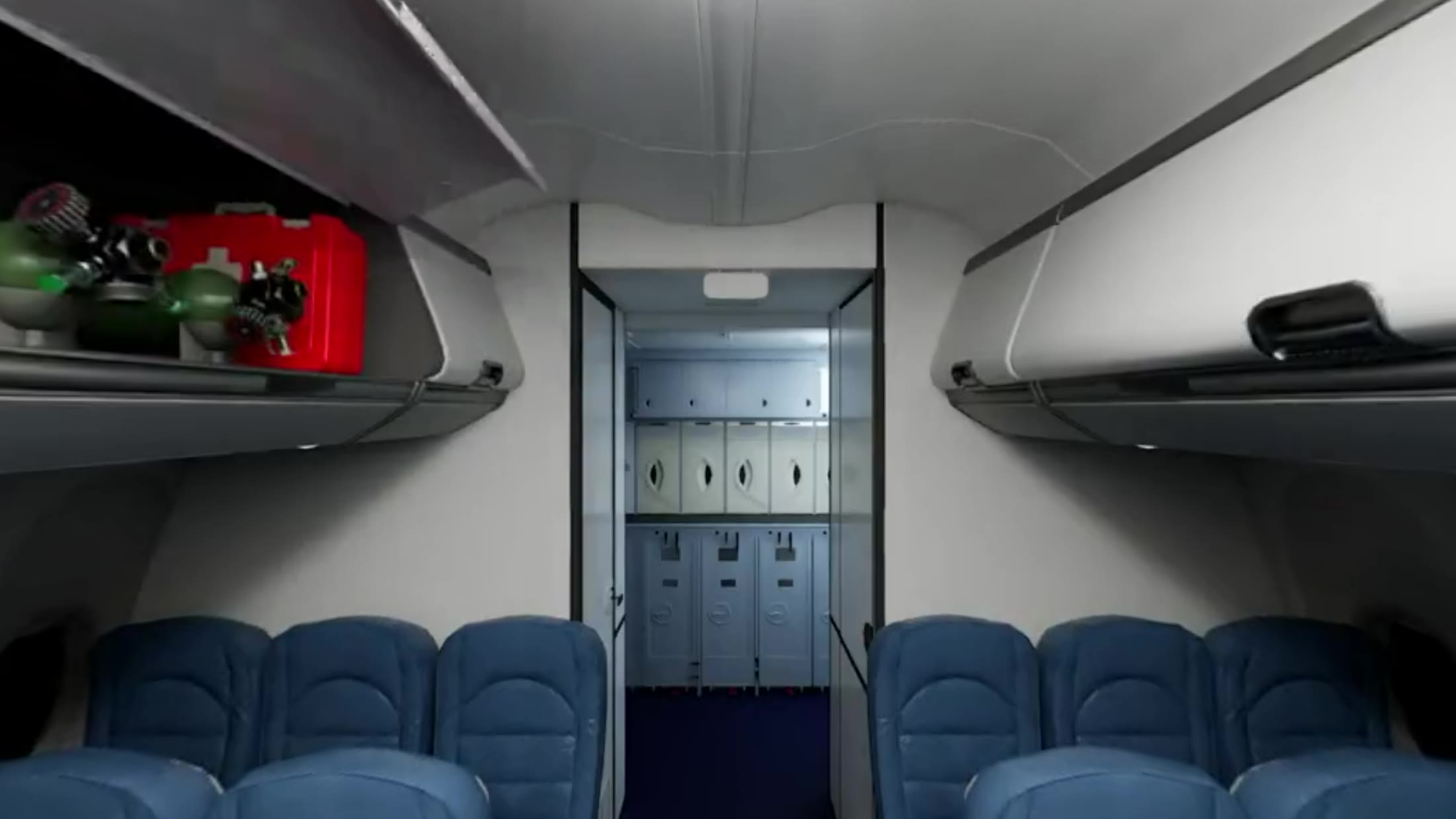
Drag to look
Your browser can't render the interactive view — the still above shows the same frame.
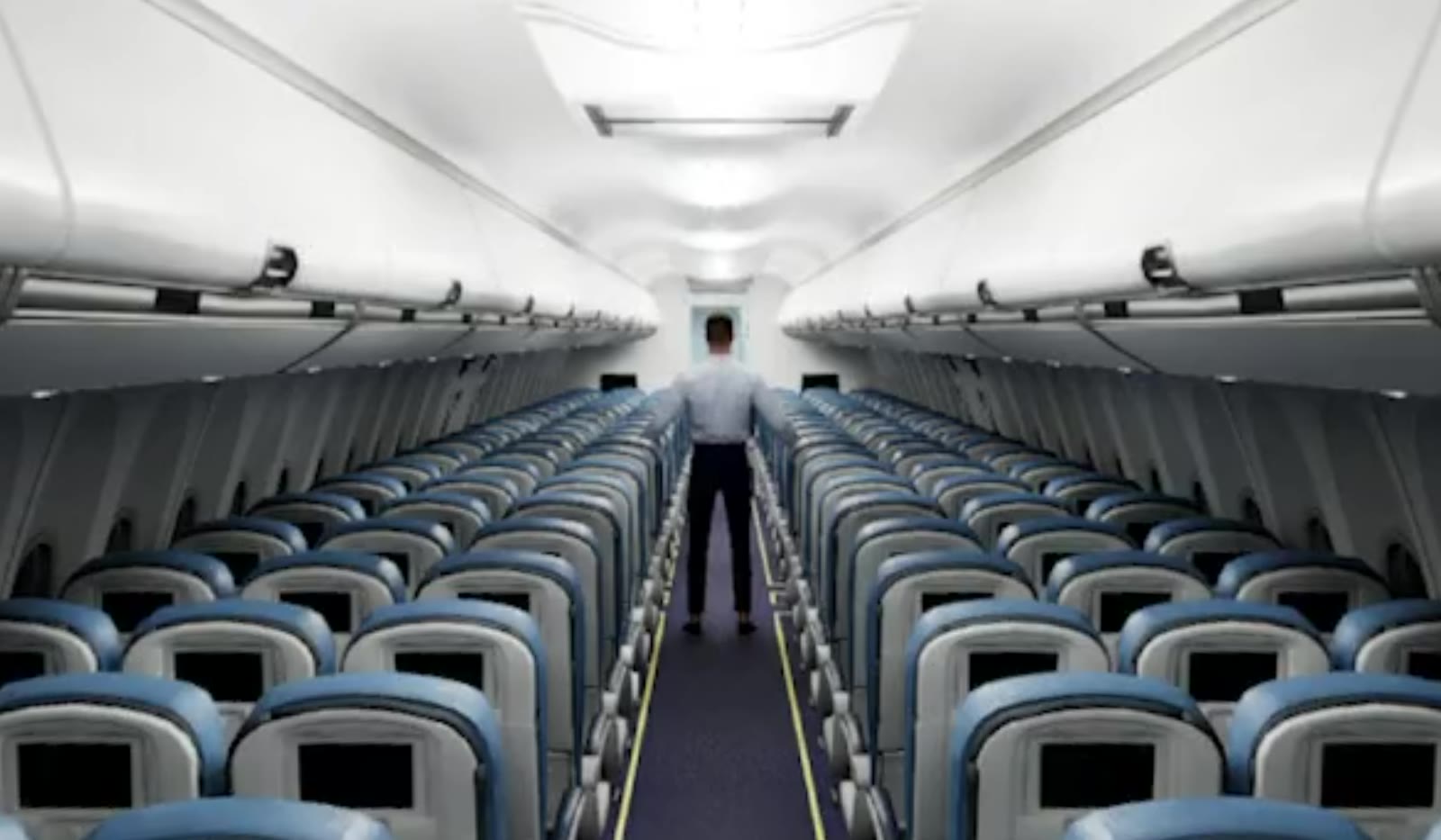
A leftover asset from another scene
This character rig, still in the default T-pose, should have been excluded from the render. But because he's a hundred and eighty degrees behind the canister animation, he was missed.
It illustrates the risk of working quickly in a medium like 360: the equirectangular view matters as much as the in-headset review. This mistake shipped — and I'm the only one who ever caught it.
The Craft

Casting someone who doesn't exist
The second break wasn't technical: it was a communication problem. CG characters are assembled by different teams in separate rooms — someone picks the body, someone else picks the voice, someone else animates. The result is only cohesive when direction is clear and effective.
The brief called for a veteran crew member — someone with enough seniority that a rookie would follow their instructions without hesitation. I built the character's voice around that natural authority.
Audition takessame line, different voices
When the voice assets landed with CG, we realized a problem. They had built the character without checking the brief — decades younger than the man I'd imagined. The voice I generated wouldn't work.
On a live-action shoot, recasting voiceover means going out to talent agencies, booking a studio, re-recording. With our new AI-powered voice pipeline, recasting for CG took an hour.
Impact
The demo did more than test our tech; it became our production engine.